Posts

Showing posts with the label cooking

Bajra Papad - the Color Secret 
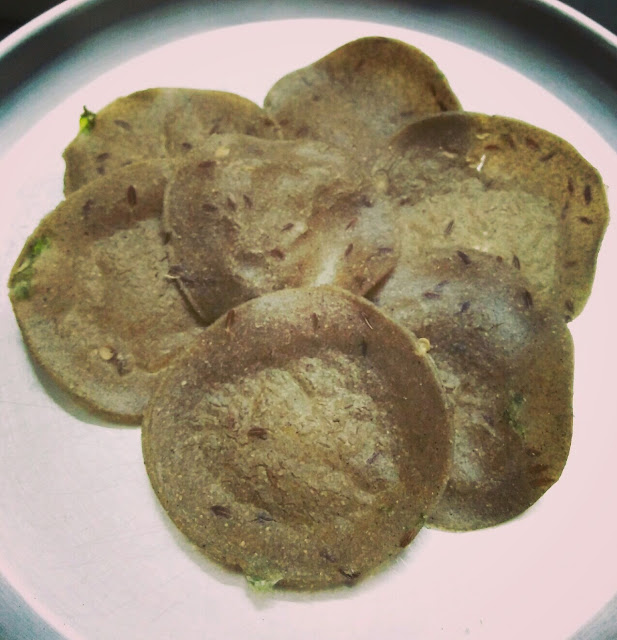
Image
Okay so this somehow sounds boring… Bajra Papad??  Eeeuw… But no.. They taste really good.. And specially with the recipe that I’m going to provide here.  Yes, since this is a novel recipe and I myself couldn’t find the recipe online (an authentic one that worked well), I’ll be attaching the recipe without which explaining the science behind it wouldn’t be given justice.  So, bajra Papad Is made up of bajra flour and I have also added some rice flour to it for better consistency and taste.  Recipe:  Preparation Time: 5mins  Cooking Time: 5-6mins  Post cooking Time: 10-15mins  Drying Time: 4-5hrs (sun drying) Yield: 50g (No. Of Papad depends on the size)  With my size it yielded 15-20 papads.  Ingredients: 1+ 1/2cup (300ml)  water  1/2 cup (100ml/60g) bajra (pearl millet)  flour  1/2 cup (100ml/59~60g) rice flour  5g Ginger – chilli paste (3:2) 1/2tsp salt(t...

The Upma Science

Image
Early morning when you run late for office or you have to prepare a quick breakfast for your husband or family, what do you make? Probably an upma? Why? Simply because it's easy and fast.. But ever wondered why does it become a solid - like mass when it cools? Or have you ever noticed that even though the entire upma is coalesced together, every grain of upma retains its individual existence?? Yes, that happens... And yes, there is science behind this simple dish prepared by Indians all over the world.. Upma is cooked by basic 3 ingredients. Semolina or suji, ghee and water. The recipe shall be available everywhere on the web, and so I'd only focus on the science involved in the recipe. 1. ROASTING : The first crucial step in making upma is roasting the Suji or semolina. Why? Suji is roasted with a little amount of fat so that each grain is separated and coated with fat. This is done to avoid lumping when the water is added. Also, in this way, each starch(suji) grain will...

The science behind Dhokla

Image
Have you ever wondered why is there this particular texture of the dhokla?  Or have you wondered what makes the dhokla rise? Of course the soda or eno fruit salt that you add to it, but how does it function?   Have you ever wondered why are there holes in between the dhokla strands that you see?   Here I’m going answer these questions, which would help you find the science behind each and every recipe that you cook and will help you to master them.  Dhoklas are made of besan(roasted Bengal gram flour), sour curd/buttermilk, and eno fruit salt / baking soda. Each ingredient contributes itself to play a role in making the final dhokla that we see as an end result.  1. Besan :  besan is the  protein source  in the dhokla. Proteins when heated along with water (in this case buttermilk contains the required water content) starts to swell and therefore increases the mobility of dry protein content. This is why we get the texture and the mouth...