Posts

Showing posts with the label food science

How is chikki made?

Image
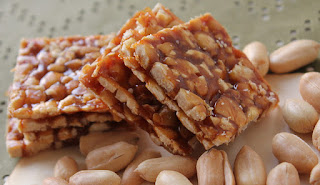
Chikki is a very common and most loved snack consumed by each and every household in India. It is a hard crack made of peanuts / ricepuff / til (sesame seeds) / Rajgeera or anything that one can think of, and jaggery / sugar. We all Know how is it made, and like my other articles, I will not mention the recipe here since its available all over the internet. What I will do is give you the basics and give you the science behind each step so that you can never go wrong with making chikki. Like I always emphasize on, cooking right is a science. If you know it, you are a Masterchef! So let’s get started. I’ve already told you the ingredients of making chikki. Lets jump on to the science and Know – How of making chikki. 1. Caramelization of sugar:  The first step we take in making a chikki is to caramelize the sugar or jaggery. However, using jaggery i sbetter than sugar since it contains micronutrients and added benefits which i shall enlist in the next article. Right now...

How and why does a chapatti puff? 

Image
Indian Flat Bread, as it may be well known in the West, is locally known as chapatti or a roti in India. It is an age old practise of eating a soft - soft chapatti topped with loads of ghee with a Sabzi of one's own choice. Be it Bhindi, karela, dal makhni, paneer butter masala, or any dal, chapatti is the best and healthiest option to team it up with. And yes, all of us try our best to puff it up while we roast it directly on the gas burner so that it's soft and gives a one of its kind mouth - feel. But we all fail and then learn and then finally rise with a proper puffed roti after several trials. But ever wondered why and how does it rise or puff so beautifully? Here's the answer. Chapatti is made of atta that's been kneaded into a dough with water salt and a little oil. Some people may add a little curd as well to make it softer and some may use milk instead of water. But what happens in the process? 1. Atta is made up of proteins called gliadin and glutenin. O...

What happens when you add boiling water to semolina? 

Image
Recently, I was trying to make a semolina / suji batter for dhokla. As usual, the First person we sought help from us out very own Mom.. So I asked her for a quick remedy and she told me add warm water to semolina and keep it aside for a while since I'd run out of curd to provide that leavening factor. Then add any veggies you want, add eno and jus bake. Being too smart, I added boiling hot water to semolina and then I realized the water was less compared to suji and so I set to heat water again. In the meanwhile what do you think happened to the mixture?? Yes, it Gelatinized.. It became sticky and lumpy. And even after adding more water, it did not separate. So all you have to do is keep beating it or whipping it till it all mixes up and forms a homogeneous mixture. But here you need to take a precaution. Whenever you add water to any cereal, for any purpose, make sure you do not add boiling water. Just add warm water, which you think is just below 80 degrees Celsius. Because...

The science behind Dhokla

Image
Have you ever wondered why is there this particular texture of the dhokla?  Or have you wondered what makes the dhokla rise? Of course the soda or eno fruit salt that you add to it, but how does it function?   Have you ever wondered why are there holes in between the dhokla strands that you see?   Here I’m going answer these questions, which would help you find the science behind each and every recipe that you cook and will help you to master them.  Dhoklas are made of besan(roasted Bengal gram flour), sour curd/buttermilk, and eno fruit salt / baking soda. Each ingredient contributes itself to play a role in making the final dhokla that we see as an end result.  1. Besan :  besan is the  protein source  in the dhokla. Proteins when heated along with water (in this case buttermilk contains the required water content) starts to swell and therefore increases the mobility of dry protein content. This is why we get the texture and the mouth...